


Best Preparations of FCSS_NST_SE-7.6 Exam 2025 Fortinet Certified Solution Specialist Unlimited 68 Questions
Focus on FCSS_NST_SE-7.6 All-in-One Exam Guide For Quick Preparation.
NEW QUESTION # 22
Refer to the exhibit, which shows the partial output of a real-time OSPF debug.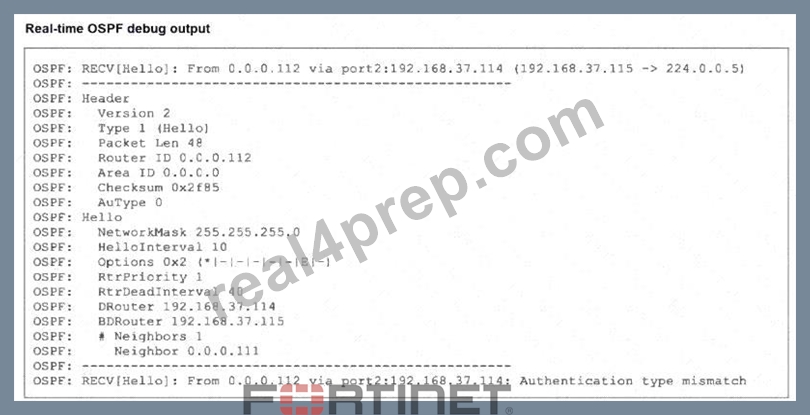
Why are the two FortiGate devices unable to form an adjacency?
- A. The passwords on the FortiGate devices do not match.
- B. The Hello packet is being sent from an OSPF router with ID 0.0.0.112.
- C. One FortiGate device is configured to require authentication, while the other is not.
- D. The two FortiGate devices attempting adjacency are in area 0.0.0.0.
Answer: C
NEW QUESTION # 23
Refer to the exhibit, which shows the output of a policy route table entry.
Which type of policy route does the output show?
- A. An ISDB route
- B. An SD-WAN rule
- C. A regular policy route, which is associated with an active static route in the FIB
- D. A regular policy route
Answer: A
NEW QUESTION # 24
Refer to the exhibit, which shows the output of diagnose sys session list.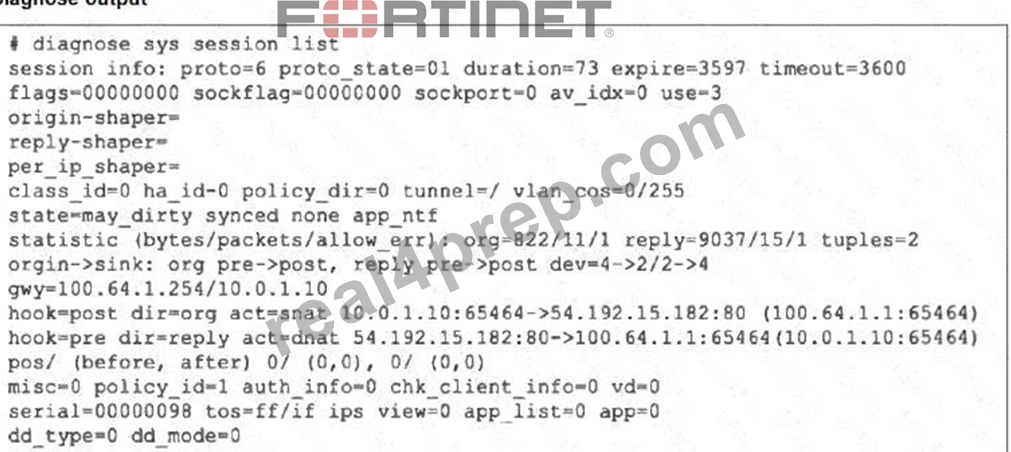
If the HA ID for the primary device is 0, what happens if the primary fails and the secondary becomes the primary?
- A. The session state is preserved but the kernel will need to re-evaluate the session because NAT was applied.
- B. The session will be removed from the session table of the secondary device because of the presence of allowed error packets, which will force the client to restart the session with the server.
- C. The secondary device has this session synchronized; however, because application control is applied, the session is marked dirty and has to be re-evaluated after failover.
- D. Traffic for this session continues to be permitted on the new primary device after failover, without requiring the client to restart the session with the server.
Answer: D
NEW QUESTION # 25
Refer to the exhibit, which shows a truncated output of a real-time LDAP debug.
What two conclusions can you draw from the output? (Choose two.)
- A. The user is authenticating using CN=John Smith.
- B. FortiOS is able to locate the user in step 3 (Bind Request) of the LDAP authentication process.
- C. FortiOS is performing the second step (Search Request) in the LDAP authentication process.
- D. The name of the configured LDAP server is Lab.
Answer: A,C
NEW QUESTION # 26
Which exchange lakes care of DoS protection in IKEv2?
- A. IKE_Auth
- B. Create_CHILD_SA
- C. IKE_Req_INIT
- D. IKE_SA_NIT
Answer: C
NEW QUESTION # 27
Refer to the exhibit, which shows the omitted output of a session table entry.
Which two statements are true? (Choose two.)
- A. The traffic matches Policy ID 1.
- B. The session has been offloaded.
- C. The traffic has been tagged for VLAN 0000.
- D. NP7 is handling offloading of this session.
Answer: B,D
NEW QUESTION # 28
Refer to the exhibit, which shows partial outputs from two routing debug commands.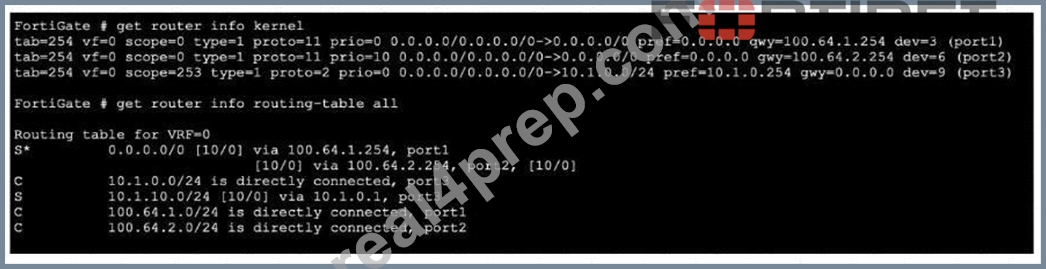
Which change must an administrator make on FortiGate to route web traffic from internal users to the internet, using ECMP?
- A. Set snat-route-change to enable.
- B. Set the priority of the static default route using port1 to 10.
- C. Set the priority of the static default route using port2 to 1.
- D. Set preserve-session-route to enable.
Answer: B
NEW QUESTION # 29
Refer to the exhibit, which shows the output of the command get router info bgp neighbors 100.64.2.254 advertised-routes.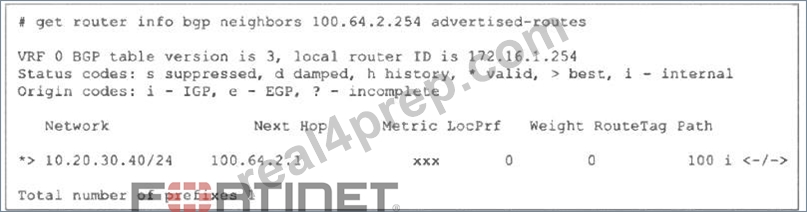
What can you conclude from the output?
- A. The BGP neighbor is advertising the 10.20.30.40/24 network to the local router.
- B. The local router is advertising the 10.20.30.40/24 network to its BGP neighbor.
- C. The router ID of the neighbor is 100.64.2.254.
- D. The BGP state of the two BGP participants is OpenConfirm.
Answer: B
NEW QUESTION # 30
Exhibit.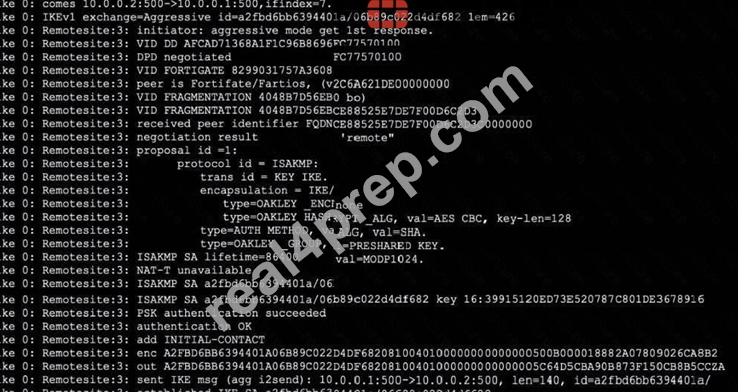
Refer to the exhibit, which contains partial output from an IKE real-time debug.
Which two statements about this debug output are correct? (Choose two.)
- A. Perfect Forward Secrecy (PFS) is enabled in the configuration.
- B. It shows a phase 2 negotiation.
- C. The initiator provided remote as its IPsec peer ID.
- D. The local gateway IP address is 10.0.0.1.
Answer: B,C
NEW QUESTION # 31
Which statement about protocol options is true?
- A. Protocol options allow administrators to configure a maximum number of sessions for each configured protocol.
- B. Protocol options allow administrators to configure which Layer 4 port numbers map to upper-layer protocols, such as HTTP, SMTP, FTP, and so on.
- C. Protocol options give administrators a streamlined method to instruct FortiGate to block all sessions corresponding to disabled protocols.
- D. Protocol options allow administrators to configure the Any setting for all enabled protocols, which provides the most efficient use of system resources.
Answer: B
NEW QUESTION # 32
Exhibit.
Refer to the exhibit, which shows the output of diagnose automation test.
What can you observe from the output? (Choose two.)
- A. The test was unsuccessful.
- B. The automation stitch test failed but the HA failover was successful.
- C. An HA failover occurred.
- D. The automation stitch test is not being logged.
Answer: A,D
NEW QUESTION # 33
In which two slates is a given session categorized as ephemeral? (Choose two.)
- A. A TCP session waiting for FIN ACK
- B. A TCP session waiting for the SYN ACK
- C. A UDP session with only one packet received
- D. A UOP session with packets sent and received
Answer: B,C
NEW QUESTION # 34
Refer to the exhibit, which shows a partial output from the get router info routing-table database command.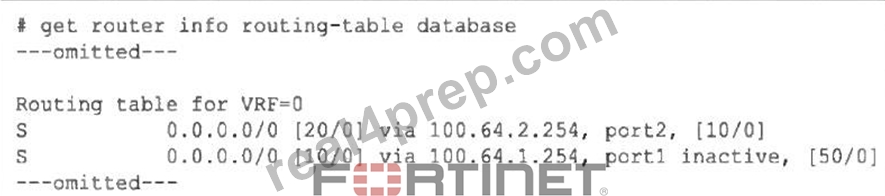
The administrator wants to configure a default static route for port3 and assign a distance of 50 and a priority of 0.
What will happen to the port1 and port2 default static routes after the port3 default static route is created?
- A. Both default static routes shown in the output will be injected into the FIB.
- B. The port1 default static route will be injected into the FIB.
- C. Neither of the routes shown in the output will be injected into the FIB.
- D. The port2 default static route will be injected into the forwarding information base (FIB).
Answer: D
NEW QUESTION # 35
Exhibit 1.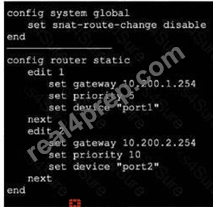
Exhibit 2.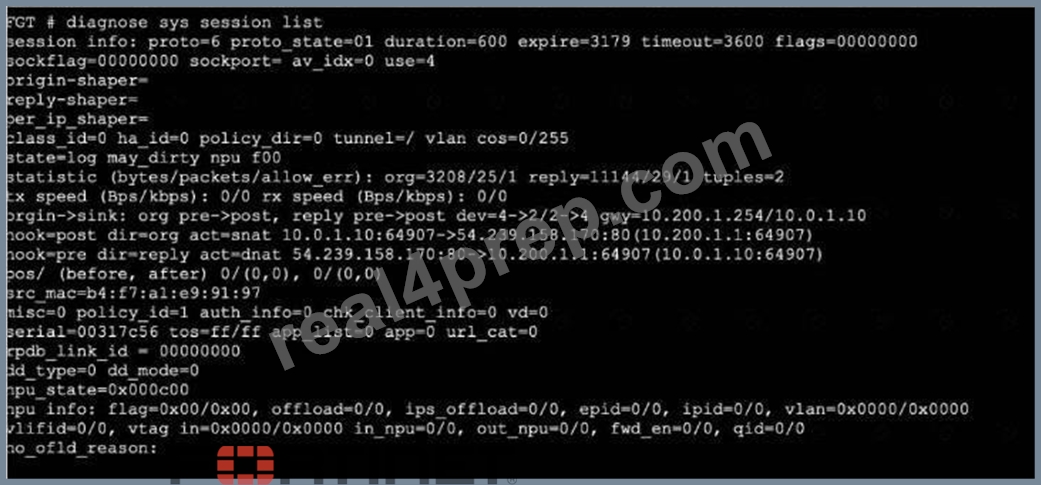
Refer to the exhibits, which show the configuration on FortiGate and partial internet session information from a user on the internal network.
An administrator would like to lest session failover between the two service provider connections.
Which two changes must the administrator make to force this existing session to immediately start using the other interface? (Choose two.)
- A. Configure set snat-route-change enable.
- B. Configure unset snat-route-change to return it to the default setting.
- C. Change the priority of the port! static route to 11.
- D. Change the priority of the port2 static route to 5.
Answer: A,C
NEW QUESTION # 36
Refer to the exhibit, which shows one way communication of the downstream FortiGate with the upstream FortiGate within a Security Fabric.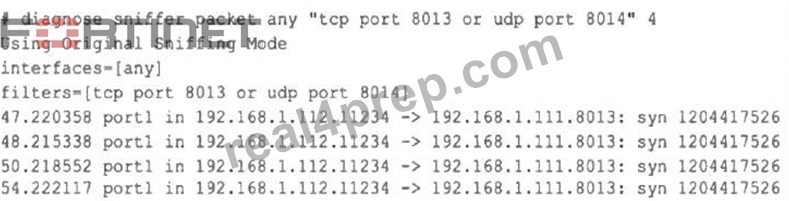
What three actions must you take to ensure successful communication? (Choose three.)
- A. Ensure TCP port 8013 is not blocked along the way.
- B. Ensure the port for Neighbor Discovery has been changed.
- C. You must enable Security Fabric/Fortitelemetry on the receiving interface of the upstream FortiGate.
- D. You must authorize the downstream FortiGate on the root FortiGate.
- E. FortiGate must not be in NAT mode.
Answer: A,C,D
NEW QUESTION # 37
Refer to the exhibit, which shows the partial output of a diagnose command.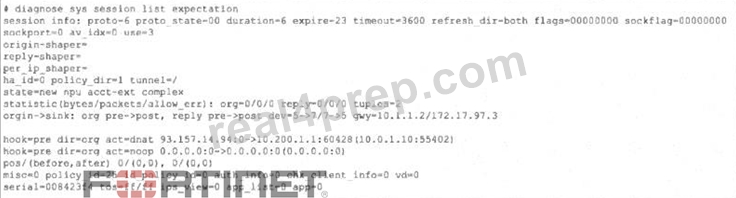
Which two conclusions can you draw from the output shown in the exhibit? (Choose two.)
- A. The session is checked against firewall policy ID 25.
- B. FortiGate will drop the expected traffic if it does not arrive within 23 seconds.
- C. Clearing the master session has no impact on the expectation session.
- D. This is a pinhole session to allow traffic for a TCP protocol that dynamically assigns TCP ports.
Answer: B,D
NEW QUESTION # 38
Exhibit.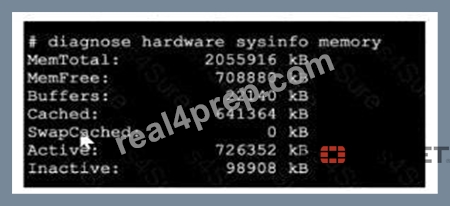
Refer to the exhibit, which shows a partial output of diagnose hardware aysinfo memory.
Which two statements about the output are true? (Choose two.)
- A. There are 98908 kB o! memory that will never be used.
- B. The user space has 708880 kB of physical memory that is not used by the system.
- C. The I/O cache, which has 641364 kB of memory allocated to it.
- D. The value indicated next to the inactive heading represents the currently unused cache page.
Answer: A,D
NEW QUESTION # 39
Refer to the exhibit.
The exhibit shows the output from using the command diagnose debug application samld -1 to diagnose a SAML connection.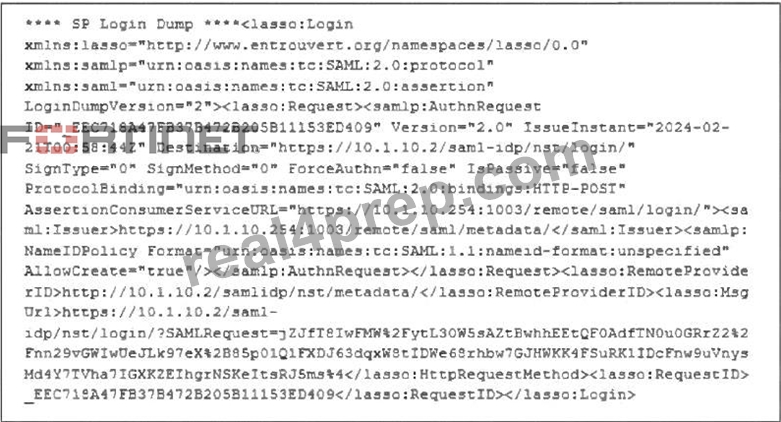
Based on this output, what can you conclude?
- A. The authentication request is for an SSL VPN connection.
- B. The IdP IP address is 10.1.10.254.
- C. The IdP IP address is 10.1.10.2.
- D. Active Directory is used for authentication.
Answer: C
NEW QUESTION # 40
Refer to the exhibit, which shows a partial output of a real-time LDAP debug.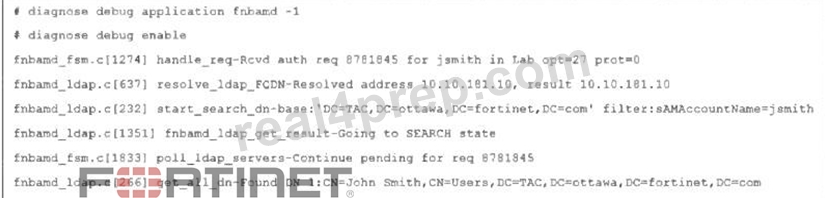
What two conclusions can you draw from the output? (Choose two.)
- A. FortiOS performs a bind to the LDAP server using the user's credentials.
- B. The user was found in the LDAP tree, whose root is TAC.ottawa.fortinet.com.
- C. FortiOS is performing the second step (Search Request) in the LDAP authentication process.
- D. FortiOS collects the user group information.
Answer: B,C
NEW QUESTION # 41
Refer to the exhibit, which shows the output o! the BGP database.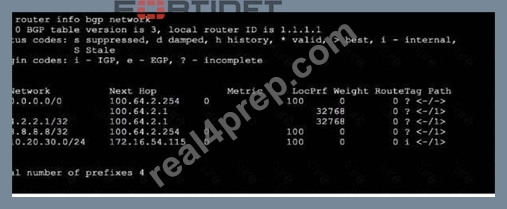
Which two statements are correct? (Choose two.)
- A. The advertised prefix of 10.20.30.0'24 is being advertised through the redistribution of another routing protocol.
- B. The first four prefixes are being advertised using a legacy route advertisement.
- C. The output shows all prefixes advertised by all neighbors as well as the local router.
- D. The advertised prefix of 10.20.30.0'24 was configured using the network command.
Answer: C,D
NEW QUESTION # 42
Which statement about IKEv2 is true?
- A. IKEv1 and IKEv2 share the concept of phase1 and phase2.
- B. IKEv1 and IKEv2 have enough of the header format in common that both versions can run over the same UDP port.
- C. IKEv1 and IKEv2 use same TCP port but run on different UDP ports.
- D. Both IKEv1 and IKEv2 share the feature of asymmetric authentication.
Answer: B
NEW QUESTION # 43
Refer to the exhibit, which shows the output of get router info bgp summary.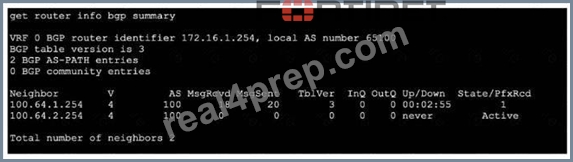
Which two statements are true? (Choose two.)
- A. The local FortiGate is still calculating the prefixes received from BGP neighbor 100.64.2.264
- B. The TCP connection with BGP neighbor 100.64.2.254 was successful.
- C. The local FortiGate has received 18 packets from a BGP neighbor.
- D. The local ForliGate has received one prefix from BGP neighbor 100.64.1.254.
Answer: C,D
NEW QUESTION # 44
......
Guaranteed Success with FCSS_NST_SE-7.6 Dumps: https://actualtests.real4prep.com/FCSS_NST_SE-7.6-exam.html